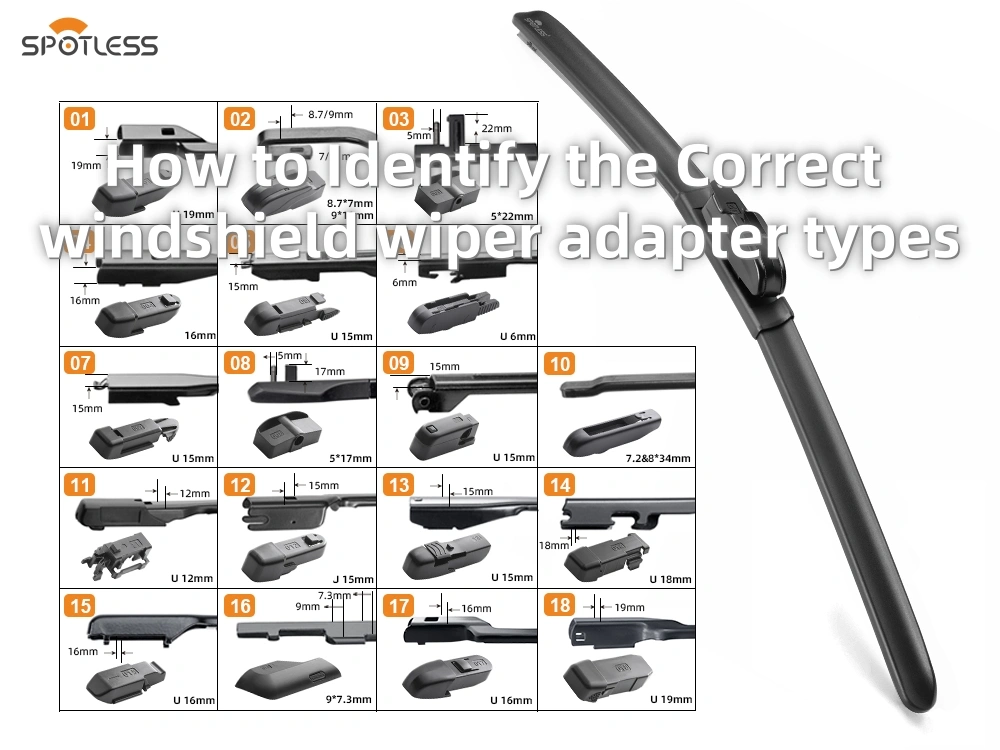
Not all wiper blades use the same adapter. Different vehicles use different windshield wiper adapter types. If you choose the wrong one, the blade may not wipe properly, make noise, leave streaks, or even scratch the windshield.
For auto parts stores and distributors, identifying the correct wiper adapter is one of the easiest ways to reduce returns and keep customers satisfied. Today, many premium replacement wiper blades come with 12 to 18 adapters, covering over 97% of common vehicle models. DENSO’s aftermarket wiper blade programme covers almost 95% of the European vehicle parc, demonstrating the industry’s move toward broad adapter coverage.
This article looks at the most common wiper adapters, how to identify them, and what you should check before recommending a new wiper blade.
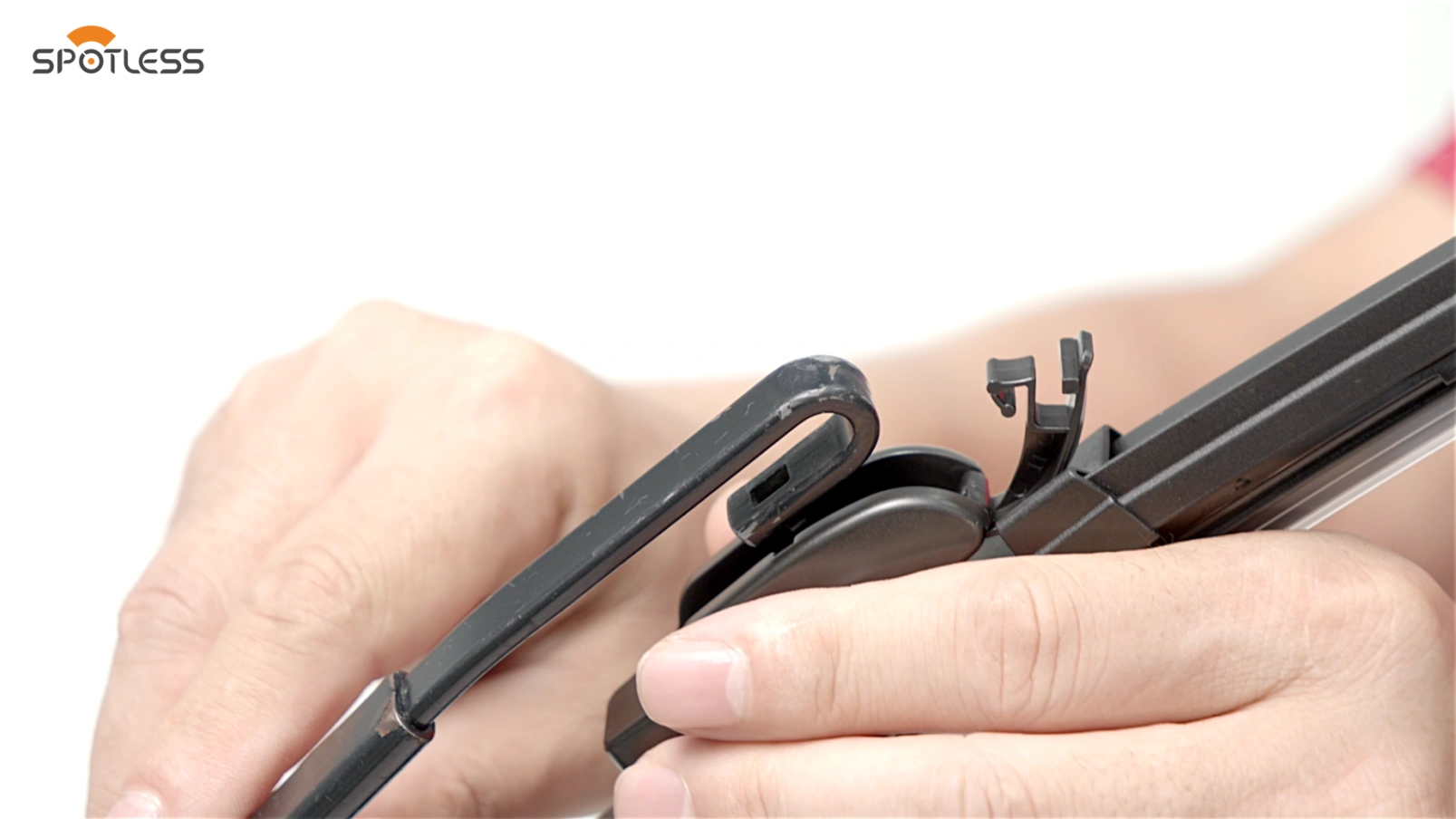
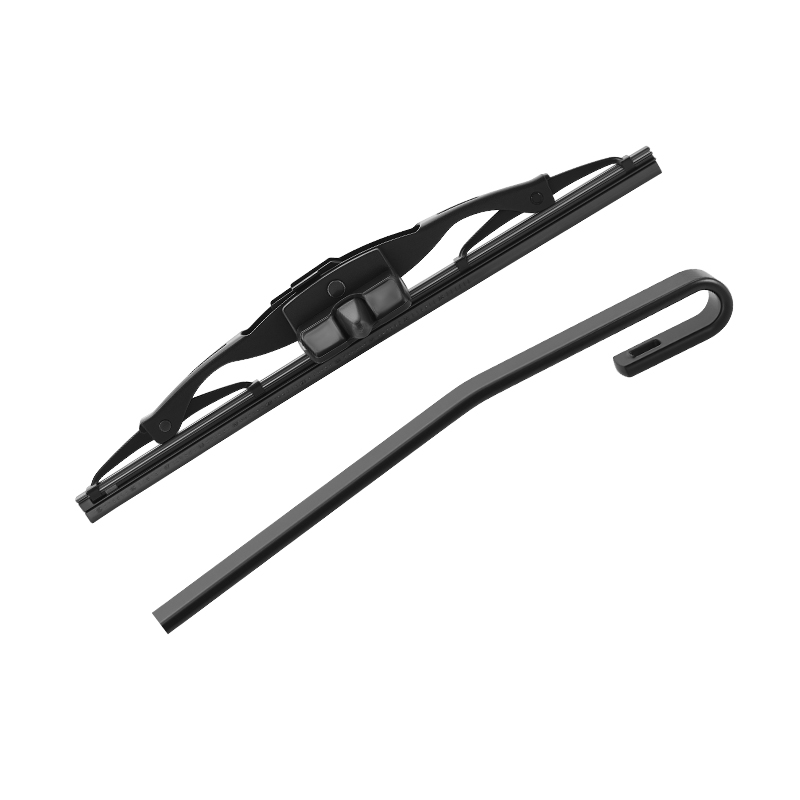
This is the most common adapter in the market. The end of the wiper arm is shaped like a hook that slides into the adapter and locks in place. Common sizes include 7mm, 9×3, 9×4, Short J Hook, and Reverse 9×4.
This design uses a small pin on the side of the wiper arm. Slide the window wiper blade into place until it locks. It is widely used on many European and Asian vehicles.
The flat wiper slides into a slot and locks with a spring clip. This type is common on European vehicles.
There are release tabs on both sides. Pinch them to remove the wiper blade, then snap the new one into place. Many newer vehicles use this design because it is quick to replace.
The release button is on top of the connector. Press to remove the wiper blade and push until it clicks to install. This adapter is also common on many newer vehicles.
These five adapter types cover most passenger vehicles. If you are not sure which one you have, compare it with the following figure to identify it.
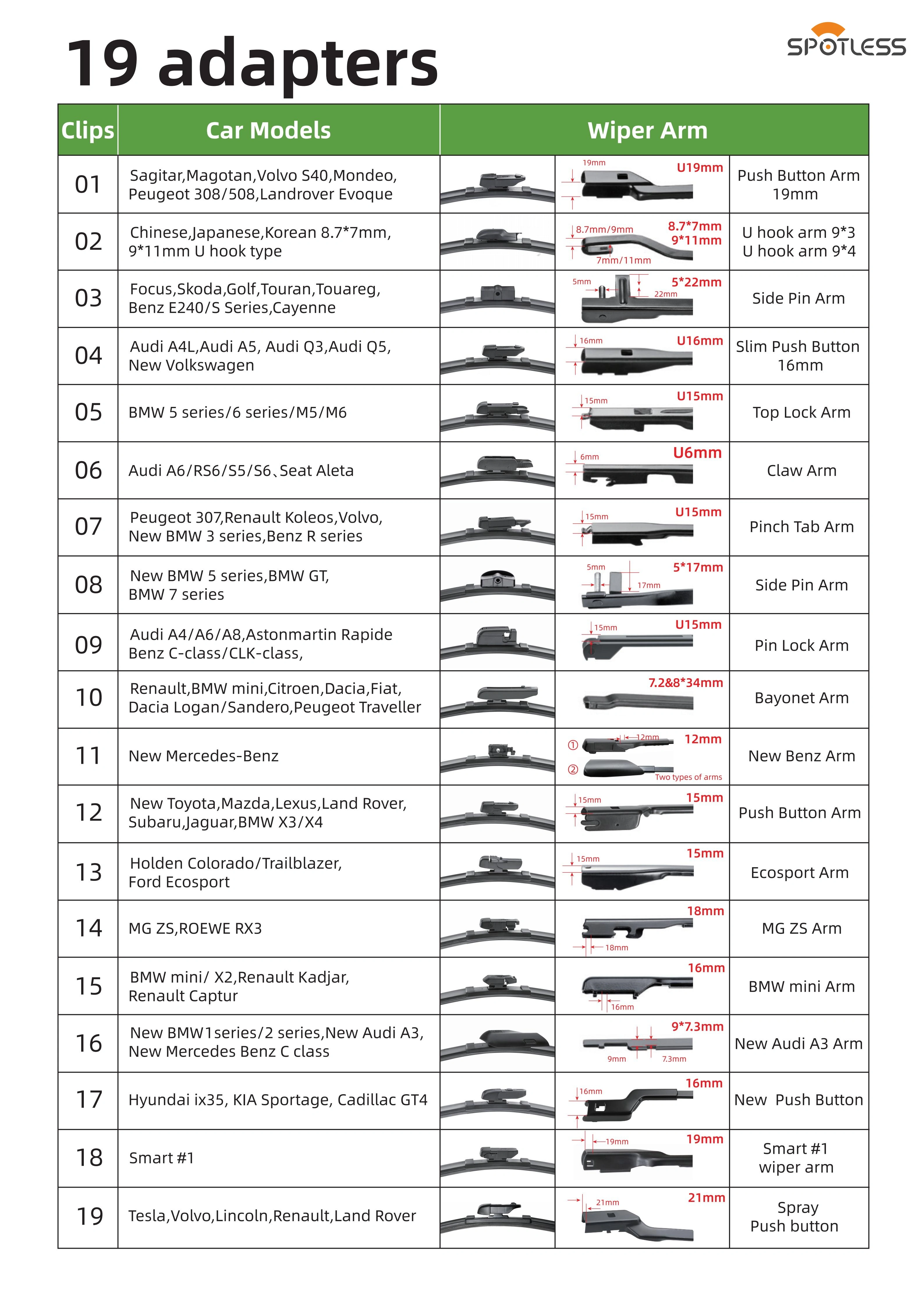
Lift the wiper arm away from the windshield and keep it in the raised position.
Look at how the wiper blade connects to the wiper arm.
A curved hook → J Hook
A pin on the side → Side Pin
A slotted connector with a lock → Bayonet
Tabs on both sides → Pinch Tab
A button on top → Top Lock
The adapter on the old wiper blade usually tells you which adapter the vehicle uses.
Check the vehicle year, make, model, and whether it is the driver-side or passenger-side blade. The owner’s manual or an adapter database can help confirm the correct adapter.
Before installation, make sure the new wiper blade has the correct adapter fitted. If multiple adapters are included, install the correct one first.
Many adapter problems can be avoided with a few simple checks.
|
Mistake |
How to Avoid |
|
Assuming all hook adapters are the same |
J-hook comes in multiple variants (9x3, 9x4, 7mm, etc.); always verify size |
|
Forcing the wrong adapter |
If it doesn’t click or lock easily, it’s the wrong type |
|
Ignoring left/right blade differences |
Driver and passenger sides often use different lengths and sometimes different adapters |
|
Not testing after installation |
Always test wipers after replacement to confirm secure fitment and proper wiping |
|
Stocking blades without adapter compatibility data |
For wholesalers, blades without clear adapter coverage information lead to higher return rates |
Identifying the correct windshield wiper adapter types is the first step to a successful replacement.
At SPOTLESS, our wiper blades support up to 18 adapter types and cover about 99% of passenger vehicles on the market. We also provide vehicle application lists, adapter information, and technical support to help distributors and auto parts stores reduce returns and improve customer satisfaction.
If you are looking for wholesale wiper blades with adapters or need help identifying a windshield wiper adapter, feel free to email wiperblade8@xmyujin.com. We are happy to share our latest vehicle application guide and wiper product information.