When the temperature drops below freezing point and snow or ice begins to accumulate on the car window glass, not all windshield wipers can handle this situation. For auto parts wholesalers and retailers, choosing the appropriate type of wiper for the local climate directly affects customer satisfaction, return rates, and the number of repeat customers.
Understanding the differences between winter wipers and all-season wipers can help dealers formulate more market-relevant inventory strategies. This article explains the technical differences, performance features, and the key points buyers should pay attention to when purchasing.
Winter wiper blades are specifically designed to handle snow, ice and cold weather.
The biggest difference lies in the rubber sheath surrounding the frame. It prevents snow, mud and ice from accumulating inside the wiper blade. This helps prevent freezing, jamming and uneven pressure during use. Therefore, when driving in winter, there are usually fewer water marks, less shaking, and a more even wiper effect.
Most cold climate wiper blade products also use softer natural rubber with low-temperature additives. Even in a temperature of minus 30 degrees Celsius, the rubber strip can still maintain its flexibility and closely adhere to the windshield.
The all-season windshield wiper blades are specially designed to maintain balanced performance in rainy weather, under sunlight, and during temperature changes. Most of them adopt frameless or traditional frame designs. The rubber is usually made of synthetic rubber or mixed rubber, which is sufficient to meet the daily usage requirements.
In mild weather, these wiper blades perform well and generally can be used for a longer period. However, once the temperature drops below the freezing point, the rubber may become hard. This may cause squeaking, scratches, and poor wiping effect problems. Most all-season wiper blades are normally suitable for around -10°C to -20°C.
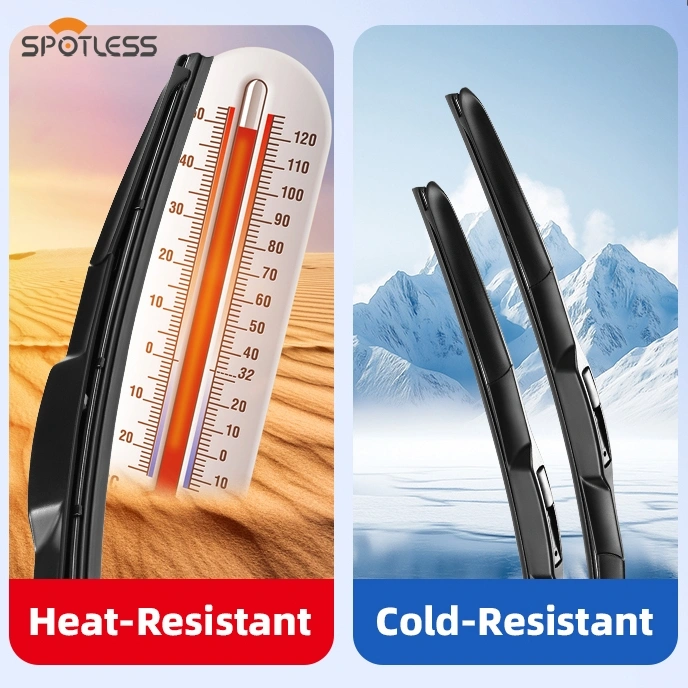
One major advantage of snow-resistant wiper blades is the sealed frame structure. The rubber cover can protect the internal springs and moving parts from being eroded by snow, road salt and ice. This helps car wiper continue working properly during winter.
All-season wiper blades are different. Their frame structure is usually exposed. Once ice builds up, movement can be blocked and windshield contact pressure drops.
Winter wiper blades perform exceptionally well in cold winter conditions. But because the rubber is softer, wear may become faster if they are used year-round in hot climates.
The windshield wipers used in all seasons usually last longer in mild climates, but they are more prone to damage in the extremely cold winter conditions.
The simple truth is no: single wiper blade works perfectly in every climate. The right choice depends on your local weather and seasons.
When sourcing winter wiper blades wholesale, wholesalers and auto parts retailers should not look only at price.
Ask whether the factory can provide test reports from -30°C or even -40°C environments. A real winter wiper blade should keep good wiping performance without cracking or losing flexibility.
Check whether the factory controls rubber compounding in-house or buys materials from outside suppliers. Unstable rubber quality is a big problem for repeat orders and long-term cooperation.
Winter blades still need to fit common wiper arm types, including: U/J hook, bayonet, pinch tab, top lock, etc. Broader adapter coverage means fewer installation problems.
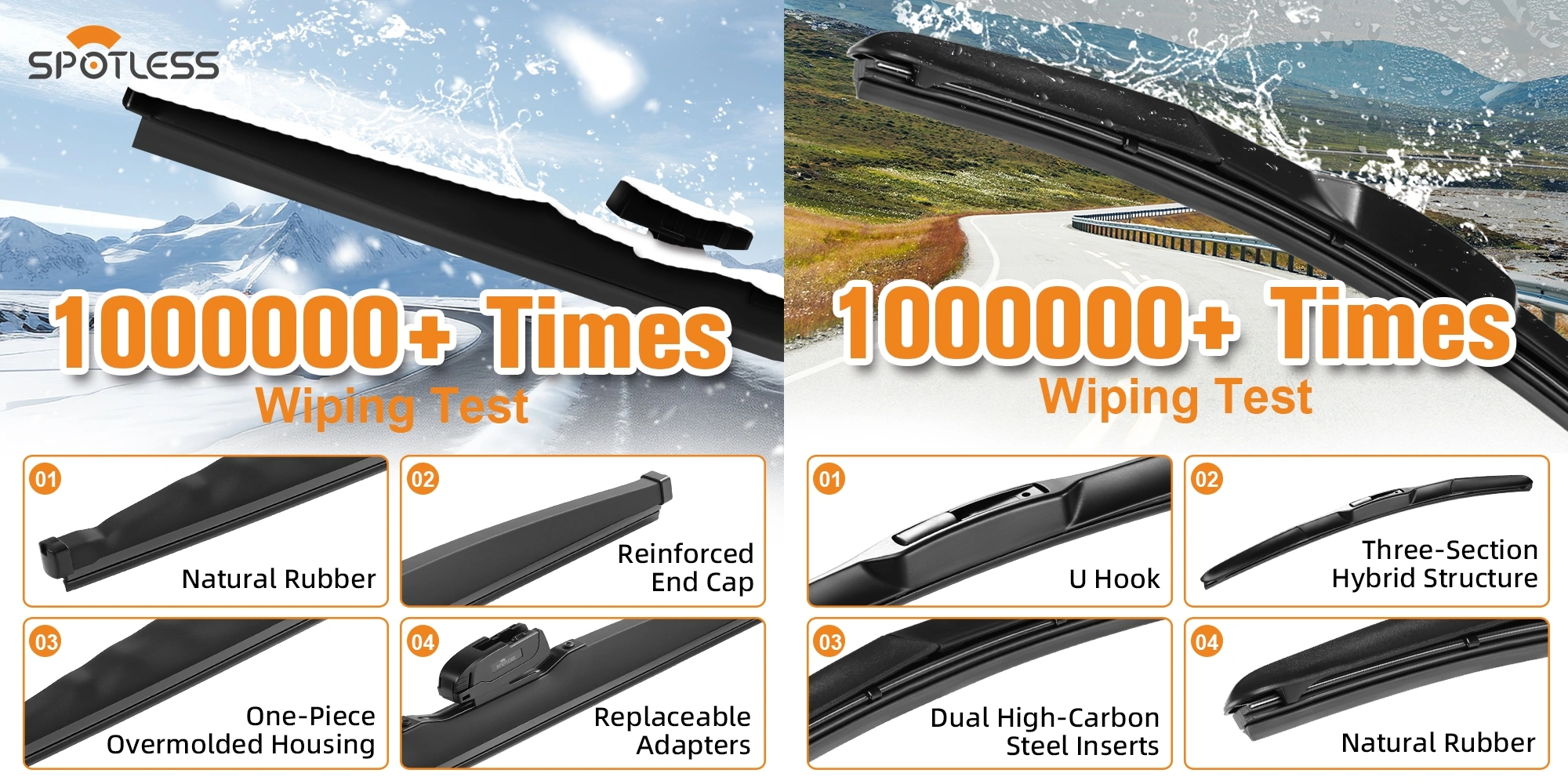
For wholesalers and auto parts retailers, choosing the correct blade type based on local climate is one of the easiest ways to reduce returns and build customer trust.
At SPOTLESS, we manufacture both winter and all-season wiper blades. All products go through full temperature testing from -40°C to 70°C. We also offer clear and precise material specifications as well as flexible and diverse minimum order quantities, so that distributors can more easily test different product lines.
If you are planning for seasonal inventory or are looking for reliable wiper blades suitable for snow and ice, please feel free to email wiperblade8@xmyujin.com or Contact us at any time. We can provide free samples, test reports, and climate-specific product recommendations for your market.