Article Summary
A clear windshield is essential for safe and comfortable driving, particularly during heavy rain, snow, and changing weather conditions. However, traditional wiper blades may experience uneven pressure, excessive wind resistance, noise, and reduced wiping efficiency over time. A Hybrid Front Wiper combines the structural support of conventional wiper technology with the streamlined appearance and aerodynamic advantages of modern flat-blade designs. This article explores its construction, working principles, major benefits, material considerations, maintenance requirements, and selection criteria to help automotive buyers and drivers make informed decisions.
Driving visibility can change dramatically within seconds. Rainwater, road spray, dust, mud, and other contaminants can accumulate on a windshield, making it difficult for drivers to identify vehicles, pedestrians, road markings, and potential hazards.
The front wiper system plays an essential role in maintaining a clear field of vision. Nevertheless, not every wiper blade provides the same level of contact, stability, and wiping consistency. An unsuitable or worn blade may leave water streaks, produce irritating noises, or fail to clean certain areas of the windshield.
A Hybrid Front Wiper addresses several of these concerns through a combination of structural support and aerodynamic design. Its integrated construction is intended to maintain stable contact with the glass while providing a more streamlined appearance than traditional exposed-frame wipers.
For vehicle manufacturers, distributors, automotive parts wholesalers, and replacement-parts retailers, understanding hybrid wiper technology is important when evaluating product performance, vehicle compatibility, and long-term customer satisfaction.
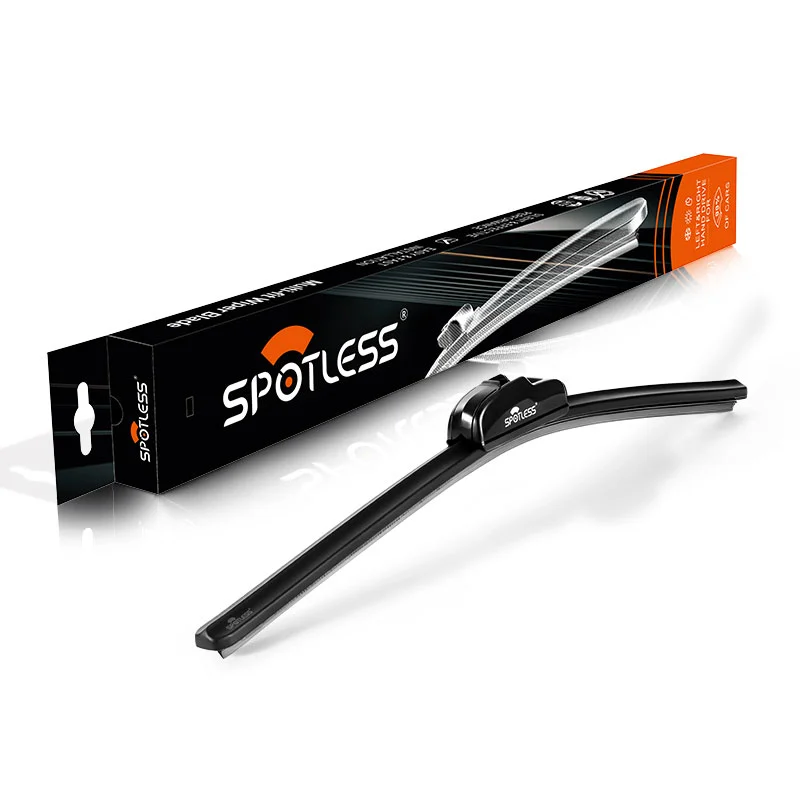
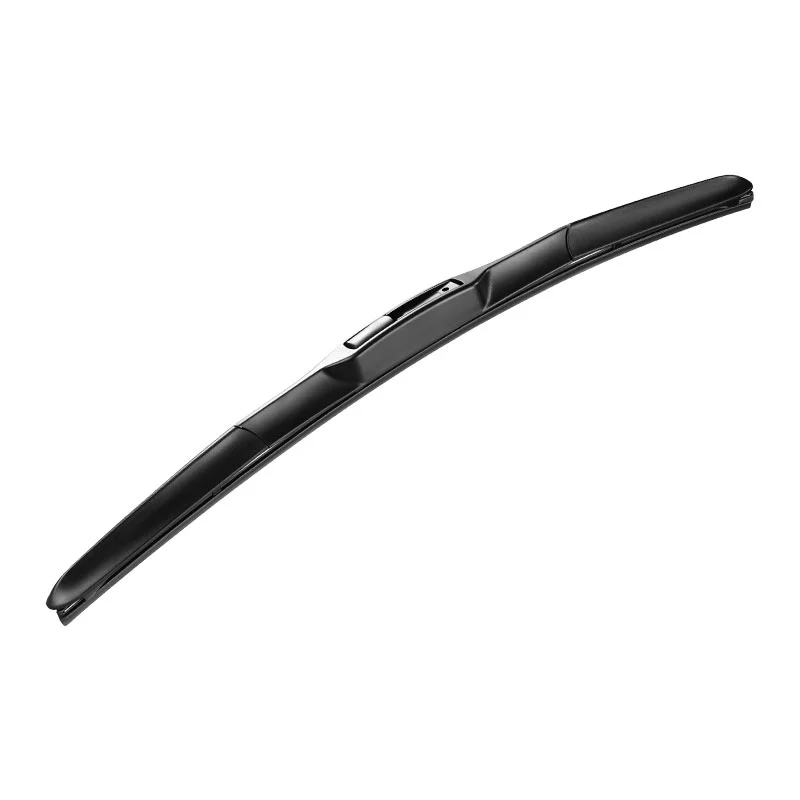
A Hybrid Front Wiper is an automotive windshield cleaning component that combines features of conventional framed wiper blades and modern flat or beam-style designs.
Unlike a conventional wiper, which generally has an exposed articulated frame, a hybrid model typically incorporates an outer aerodynamic cover over its supporting structure. The internal frame helps distribute pressure along the wiping element, while the outer housing creates a streamlined profile.
During operation, the vehicle's wiper motor drives the wiper arm across the windshield. The arm applies force to the blade assembly, and its supporting structure transfers that force toward the rubber wiping edge. As the blade moves across the glass, the wiping element removes water and surface contaminants.
The actual wiping result depends on several factors, including blade geometry, rubber quality, windshield curvature, installation accuracy, and wiper arm condition.
The performance of a Hybrid Front Wiper depends on how its individual components work together. Each part contributes to stability, wiping consistency, weather resistance, and overall service life.
The internal support frame is one of the most important structural elements. It provides mechanical stability and helps transfer pressure from the wiper arm to different sections of the rubber blade.
A properly designed support structure can accommodate windshield curvature and help reduce inconsistent contact along the wiping edge. This is particularly important for vehicles with wider or more curved front windshields.
Material selection, structural strength, connection accuracy, and dimensional consistency all influence the reliability of this component.
The aerodynamic outer cover gives hybrid wipers their distinctive appearance. It protects parts of the internal assembly and creates a smoother external profile compared with conventional exposed-frame designs.
At higher vehicle speeds, airflow can influence wiper blade stability. An appropriately designed aerodynamic housing can help manage wind resistance and reduce unwanted blade lift under suitable operating conditions.
The cover can also help limit direct exposure of certain mechanical components to dust, dirt, and environmental contaminants.
The rubber wiping element directly contacts the windshield, making its quality critical to overall performance.
Its flexibility, edge precision, surface finish, and resistance to environmental aging affect wiping smoothness and water removal.
Depending on the product specification, manufacturers may use natural rubber, synthetic rubber, or specially formulated rubber compounds. Surface treatments and coatings may also be incorporated to reduce friction and improve wiping characteristics.
Hybrid wiper technology offers several practical advantages for drivers and automotive replacement-parts buyers. Its benefits come from combining mechanical support with a more enclosed and streamlined structure.
The supporting frame helps transfer pressure across the blade, supporting consistent contact with the windshield when properly matched to the glass curvature.
The integrated outer cover provides a streamlined shape that can help manage airflow and reduce wind-related instability.
The covered structure helps shield parts of the internal mechanism from direct exposure to dirt and environmental contaminants.
Suitable rubber formulations and precise blade edges can help reduce friction-related noise and improve wiping consistency.
The integrated appearance offers an attractive alternative to traditional exposed-frame wiper assemblies.
Hybrid designs are available for different vehicle platforms, provided the blade length, curvature, and connector match the application.
It is important to understand that these benefits depend on actual product engineering and testing. A hybrid design does not automatically guarantee better performance than every conventional or beam blade. Correct vehicle matching and manufacturing quality remain essential.
Automotive wiper blades generally fall into three main categories: conventional, beam, and hybrid. Although all three perform the same basic function, their construction methods and design priorities are different.
| Comparison | Conventional Wiper | Beam Wiper | Hybrid Front Wiper |
|---|---|---|---|
| Structure | Exposed articulated frame | Curved flexible support structure | Supported frame with outer cover |
| Appearance | Traditional design | Flat and frameless appearance | Integrated aerodynamic appearance |
| Pressure Support | Multiple pressure points | Flexible continuous support | Articulated internal support |
| Wind Resistance | Generally higher exposed profile | Low-profile design | Streamlined outer housing |
| Component Protection | More exposed components | Generally fewer exposed joints | Covered internal structure |
| Design Focus | Practical and economical | Flexible support and low profile | Combination of frame support and aerodynamic styling |
A hybrid blade can be a practical choice for vehicle applications that use a framed wiper structure but require a more modern, enclosed design.
It may also appeal to automotive distributors and aftermarket retailers looking for products that balance structural support, appearance, and everyday wiping functionality.
However, the best option always depends on the original equipment design, windshield shape, wiper arm connector, local climate, and customer requirements.
For automotive parts importers, wholesalers, distributors, and purchasing managers, selecting a hybrid wiper blade involves more than comparing prices. Product compatibility and consistent quality have a direct influence on customer satisfaction and return rates.
Different vehicles use different wiper lengths, arm designs, mounting systems, and windshield curvatures. Before purchasing, buyers should confirm the intended vehicle make, model, production year, and applicable blade specifications.
Incorrect blade dimensions may result in incomplete wiping coverage, interference between the blades, or insufficient contact at certain windshield areas.
Always verify the required dimensions against reliable vehicle application information or original equipment specifications.
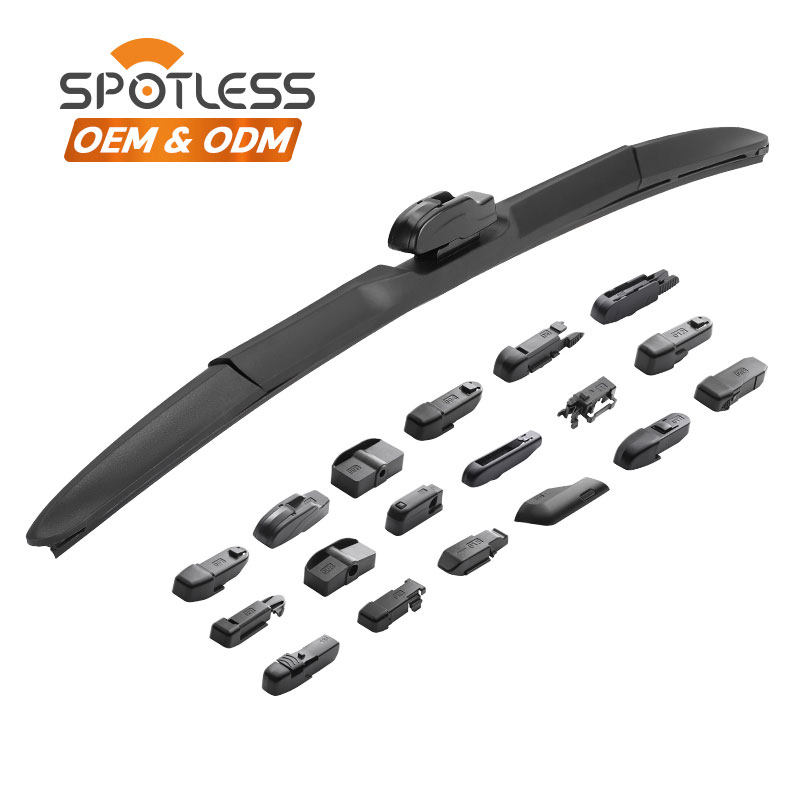
Wiper arm connections are not universal. Common mounting arrangements include hook-type, side-pin, bayonet, and other application-specific designs.
Purchasers should check connector compatibility before confirming an order, particularly when sourcing products for multiple vehicle platforms.
Rubber quality influences flexibility, wiping smoothness, environmental resistance, and product durability. Buyers should ask suppliers about the rubber compound, surface treatment, quality inspection procedures, and relevant performance test results.
For bulk purchasing, consistent dimensions, stable material quality, accurate assembly, and reliable packaging are especially important. A supplier should be able to explain its quality control process and product inspection standards.
Different markets may require different product lengths, connector configurations, branding, labeling, and packaging formats. Buyers should confirm available customization options and minimum order requirements before starting a purchasing project.
A Hybrid Front Wiper is exposed to sunlight, rain, temperature fluctuations, dust, and repeated mechanical movement. These conditions place continuous demands on its materials and construction quality.
Reliable production requires attention to each stage of the manufacturing process. Even small dimensional deviations can influence assembly accuracy and vehicle fitment.
Important quality control considerations include:
For professional automotive buyers, supplier evaluation should include manufacturing capability, quality documentation, production consistency, communication efficiency, and after-sales support.
Yujin Xiamen Plastic Manufacturing Co., Ltd. is a company name buyers can include in their supplier evaluation when exploring automotive plastic manufacturing and related product sourcing opportunities. For specific Hybrid Front Wiper models, available materials, technical specifications, and customization capabilities, buyers should confirm the details directly with the company.
Even a well-manufactured wiper blade can experience wear during regular use. Proper maintenance helps preserve wiping performance and makes it easier to identify problems before they affect driving visibility.
There is no single replacement interval suitable for every vehicle. Wiper life depends on rubber formulation, sunlight exposure, local climate, frequency of use, windshield condition, and storage environment.
Regular inspection is more useful than relying exclusively on a fixed replacement schedule. Many vehicle maintenance recommendations suggest inspecting wipers frequently and replacing them when wiping quality deteriorates or visible damage appears.
Recognizing early signs of wiper deterioration helps drivers address problems before visibility becomes significantly compromised.
| Problem | Possible Cause | Recommended Action |
|---|---|---|
| Water streaks | Dirty or worn rubber edge | Clean and inspect the wiping element |
| Chattering noise | Friction, contamination, or incorrect blade angle | Clean the glass and check blade alignment |
| Uneven wiping | Incorrect pressure or windshield mismatch | Check the blade specification and arm condition |
| Skipping movement | Damaged rubber or poor glass contact | Inspect the blade and mounting connection |
| Visible rubber cracks | Environmental aging or prolonged exposure | Replace the damaged blade |
| Loose blade assembly | Incorrect installation or damaged adapter | Check the connector and reinstall or replace |
Persistent wiping problems should not automatically be attributed to the blade itself. A worn wiper arm, damaged windshield, contaminated glass, or faulty wiper mechanism may also contribute to poor performance.
For B2B buyers, choosing the right manufacturer is an important part of building a stable automotive parts supply chain. A competitive quotation alone does not guarantee reliable products or consistent deliveries.
Before selecting a supplier, purchasing professionals should evaluate several important areas.
Understand the supplier's production facilities, equipment, manufacturing processes, and ability to handle the required order volume.
Ask about incoming material inspection, in-process quality control, finished-product testing, and the handling of defective products.
For customized automotive components, technical communication and development support are important. Buyers should confirm whether the manufacturer can work with product drawings, samples, dimensions, and application requirements.
Consistent lead times, transparent order communication, appropriate packaging, and stable production planning help reduce purchasing risks.
Professional suppliers should be able to explain product specifications, quotation details, order conditions, customization possibilities, and delivery arrangements clearly.
Yujin Xiamen Plastic Manufacturing Co., Ltd. can be contacted by buyers interested in discussing plastic manufacturing requirements and potential automotive component sourcing projects. Product-specific technical information and commercial terms should be confirmed according to the actual project.
A Hybrid Front Wiper combines an articulated supporting structure with an aerodynamic outer cover. A conventional wiper generally has a more exposed frame. The hybrid design provides a more integrated appearance while retaining mechanical support for the wiping element.
No. Compatibility depends on the vehicle's wiper arm connector, blade length, windshield curvature, and original equipment requirements. Always check the vehicle application before purchasing.
Its aerodynamic outer cover can help manage airflow and reduce wind-related lift. However, actual high-speed performance depends on the blade design, vehicle application, installation, and testing results.
Common materials include natural or synthetic rubber for the wiping element, metal for internal support components, and engineered plastics for the outer cover and connectors. The exact material combination varies by manufacturer and product specification.
Possible reasons include worn rubber, dirt on the windshield, contamination on the wiping edge, incorrect installation, or uneven contact pressure. Cleaning and inspecting the blade is a good first step.
Service life varies according to rubber quality, environmental conditions, sunlight exposure, and usage frequency. Regular inspection is recommended, and damaged or ineffective blades should be replaced promptly.
Depending on the manufacturer's capabilities, customization may include blade lengths, connector configurations, materials, outer housing designs, and packaging. Buyers should provide vehicle application details and technical requirements for evaluation.
Wholesalers should confirm vehicle compatibility, blade dimensions, connector types, rubber specifications, quality inspection procedures, packaging, minimum order quantities, and production lead times.
No. A hybrid wiper generally uses an articulated support frame covered by an aerodynamic housing, while a beam wiper typically relies on a curved flexible support structure without a conventional external articulated frame.
Evaluate the supplier's manufacturing experience, material selection, quality control procedures, technical communication, customization capabilities, sample availability, and delivery reliability. Request relevant product specifications and test information before placing an order.
A Hybrid Front Wiper combines the mechanical support of a conventional framed blade with the streamlined appearance and protective characteristics of a modern aerodynamic design. Its construction can provide stable windshield contact, practical component protection, and a smooth wiping experience when properly engineered and matched to the vehicle.
For drivers, choosing the correct blade and maintaining it regularly are essential to clear visibility. For automotive manufacturers, distributors, wholesalers, and aftermarket retailers, product consistency, material quality, compatibility, and supplier reliability should remain key purchasing priorities.
As automotive components continue to evolve, hybrid wiper technology represents a practical option for buyers seeking a balance between structural support, functional performance, and modern product design.
Yujin Xiamen Plastic Manufacturing Co., Ltd. welcomes inquiries from international buyers interested in plastic manufacturing and related component sourcing. Whether you are evaluating a new product project, comparing manufacturing options, or discussing customized requirements, clear technical communication is the first step toward a successful cooperation.
Have a product sourcing project or customized component requirement? Contact Yujin Xiamen Plastic Manufacturing Co., Ltd. to discuss your specifications, application needs, and potential cooperation opportunities.
Contact us today and let's explore the right manufacturing solution for your business!