Most aftermarket distributors don’t discover wiper blade problems in the lab.
They discover them in the form of returns, complaints, and uncomfortable conversations with customers.
What often goes unnoticed is that many of these issues are not caused by poor manufacturing quality, but by something far more common:
selling the right product into the wrong climate.
After working with distributors across multiple regions, one pattern appears again and again—
when climate is ignored during product selection, margins quietly erode months later.
On paper, many wiper blades look similar.
They may share comparable materials, packaging, or even price points. But once they enter real-world environments, climate becomes the deciding factor.
For distributors, the result is familiar:
Climate mismatch rarely causes immediate failure.
Instead, it creates early-life dissatisfaction, which is far more damaging in the aftermarket.
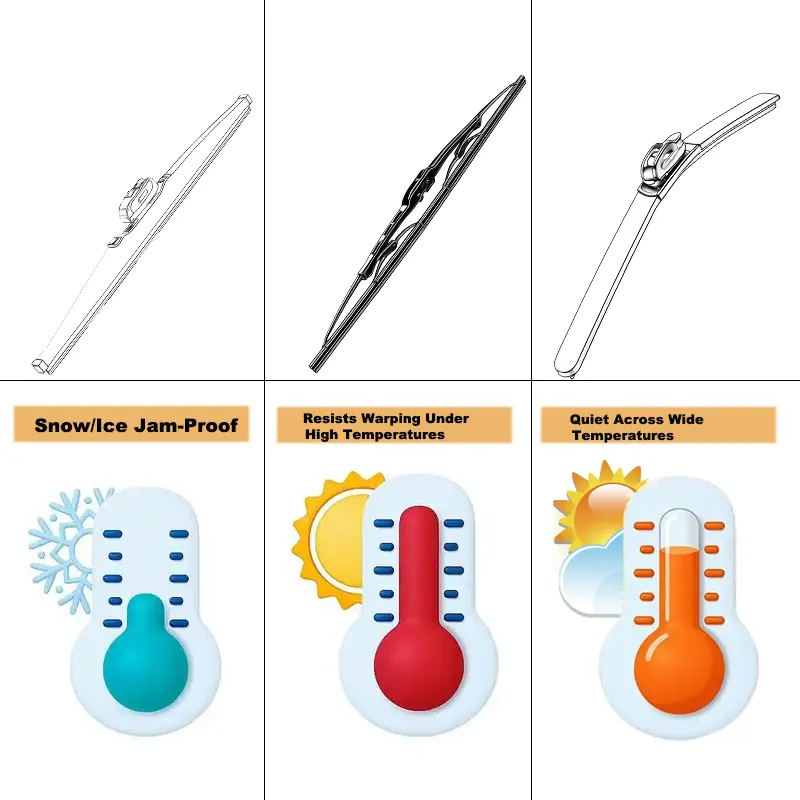
Typical regions: Northern Europe, Canada, Russia, northern U.S.
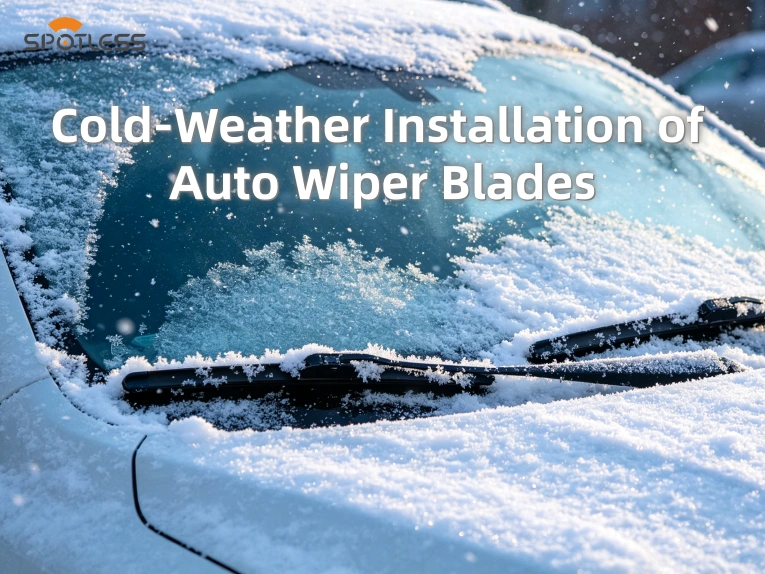
In these markets, distributors often notice problems shortly after the first heavy snowfall.
Frames freeze, rubber stiffens, and wiping performance deteriorates rapidly.
Standard blades—both frame and flat—are vulnerable because snow and ice enter exposed structures and refreeze during operation.
This is why winter wiper blades exist.
Fully enclosed designs prevent ice buildup inside the blade.
Low-temperature rubber compounds remain flexible when standard rubber hardens.
For distributors, this usually means:
Clear positioning as a “right product for the region,” not a universal compromise
Winter blades are not general-purpose items.
They are risk-control tools for snow-heavy markets.
Typical regions: Middle East, North Africa, Australia, southern U.S.
In hot climates, failures rarely happen immediately.
Instead, distributors start hearing complaints weeks after exposure to prolonged heat and sunlight.
The most common issues are not dramatic—but persistent:
In these regions, durability matters more than appearance or aerodynamics.
Conventional metal-frame wiper blades often outperform generic flat blades simply because they maintain pressure stability under heat.
Flat blades can work as well—but only if they are specifically designed and tested for high-temperature environments.
For distributors, the key lesson is simple:
not all “global” flat blades are suitable for hot markets, even if they perform well elsewhere.
Typical regions: Western Europe, East Asia, coastal regions
These markets are where distributors usually build their volume.
Conditions are moderate, but usage is frequent.
The priority is consistent performance, low noise, and predictable replacement cycles.
This is where high-quality all-season wiper blades make the most sense.
They offer balanced rubber formulations, stable structures, and wide temperature tolerance—without forcing distributors to manage multiple climate-specific SKUs.
For many distributors, all-season blades become:
They are not designed for extremes—but they perform where most vehicles actually operate.
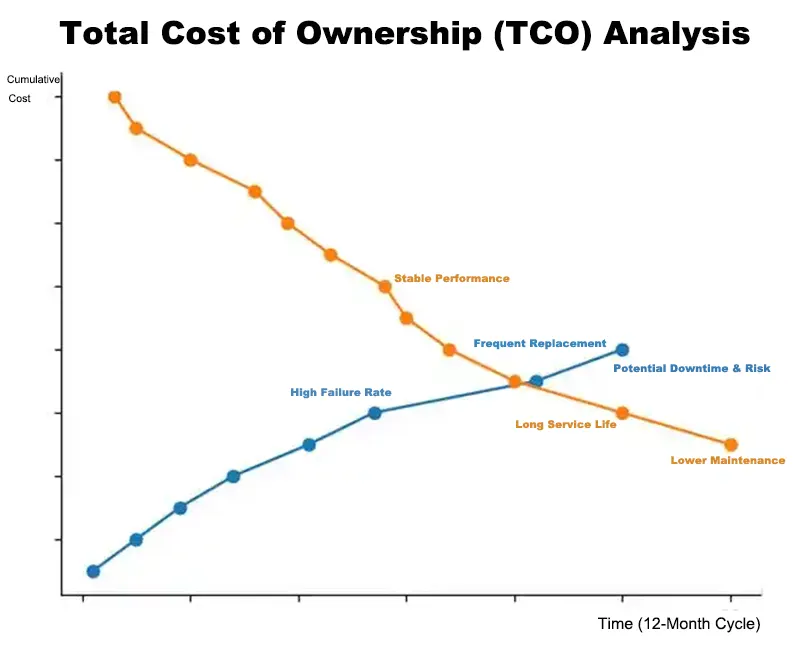
Climate-based selection is not about expanding your catalog.
It is about reducing hidden costs.
Distributors who apply this approach tend to follow a few practical rules:
The biggest savings often come from what distributors stop doing, not what they add.
As a manufacturer focused on the aftermarket, we don’t believe in pushing one blade for every market.
Instead, we work with distributors to understand:
Our role is not just to supply wiper blades, but to help distributors avoid preventable problems before they reach the end user.
Climate-based wiper blade selection is rarely discussed until something goes wrong.
By then, the cost has already been paid—in returns, lost confidence, or damaged brand perception.
For aftermarket distributors, aligning products with real-world environments is one of the simplest ways to protect margins and reputation at the same time.
If you are supplying multiple regions, climate should not be an afterthought.
It should be part of your sourcing strategy from the start.
Contact us (wiperblade8@xmyujin.com)to discuss a climate-based wiper blade portfolio tailored to your target markets.